Christo et Ecclesiae 

My very first introduction into life as a pastor’s wife felt like a colossal crash and burn.  

I had married a businessman and was accustomed to waving a breezy goodbye each weekday morning, smiling with, Dinner at 6!  I home-schooled our children, and our days were full of lessons and field trips and sports practices. Friday was pizza night and an invitation to the slower-paced weekend. Church was church. Work was work. And the two did not meet. 

When Jon became a pastor, suddenly work and church became synonymous, and I had no idea how complex our simple, quiet life would become. Overnight.

We moved into the parsonage (situated directly behind the church) on a Saturday, with Sunday being Day One of Jon’s employment. Piles of boxes were stacked about our dining room, and I could not find my six-year-old’s shoes. With one eye on the clock, and the other on the moving-box chaos surrounding me, I realized that the shoes were likely buried. She would have to wear flip flops.

Is everyone almost ready? I trilled down the narrow hallway, as I brushed my little girl’s hair into pigtails. Jon was already at church. As the boys brushed their teeth and tied their shoes, there was a knock at our back door.

I could not imagine who was here at this early hour. I did not have to wonder for long, as a woman’s face appeared in the window, hand cupped to the glass in order to peer inside our dining room.

I was stunned.

She knocked again, and I opened the door.

Good morning! She introduced herself. I want to invite your kids to Sunday School and I brought a pumpkin to show you what Bible verse we are carving in them today. She held up a round pumpkin.

I think I smiled, pointed to our boxes, and told her that despite a crazy morning, we would be over to church soon.

She stood on tiptoes, attempting to look over my shoulder into our home. Where are your children?

They are getting ready for church. I waved and thanked her as I backed up. We’ll see you soon! I slowly closed the door and leaned against it. Would this be a common event? If so, I needed to buy curtains, and fast.

I cherish privacy. Deeply. To peer into anyone’s window is as unimaginable to me as stealing a car.

My life as I knew it was over. Gone. It had vanished into thin air. We were living in a fishbowl.

***

Hours later, after Jon preached his first service as pastor, our family lined up to greet the congregants. I can see our children now—the boys tanned with slicked down hair, our daughter so small, blond pigtails bobbing. They were proud of their father and it showed on their glowing, upturned faces as we shook hands with nearly everyone.  

Afterward, as we returned to the pews to gather our Bibles, a tall, sour-looking woman approached me. 

I need to speak with you, she said, coolly. 

I turned and smiled, striving for friendliness, longing to make a good impression. 

You need to speak to your sons. She pointed at my chest. 

My heart fluttered. 

Your boys shake hands too firmly. Too strong a grip. We have elderly people in our congregation and it is inconsiderate. They could break their bones. 

I had no words. 

Also, you need to do a better job critiquing your husband. Tell him that he needs to look over the entire congregation when preaching. He was favoring one side. She waved a finger in the general direction. 

My eyes filled as she turned and strolled away. 

Day One and I was crushed. Who did this woman she think she was, criticizing my precious family who had done nothing wrong?  

Truthfully? I wanted to trip her as she walked out the door.

How’s that for Day One as a pastor’s wife? 

*** 

Recently, many years following my initial days as a pastor’s wife, I was jolted; convicted. All because of one sentence from Elisabeth Elliot, a woman who had once been a missionary to an unreached people group.  

The Aucas had murdered my husband, Jim. But I did not hate them. I loved them, she said. 

I was cut to bits. This woman loved and served the very people that speared her Jim to death.  

My own husband, Jon, is very much alive but stands in a frequent line of fire. He is my pastor, and I am favored to be married to this man of courage, who consistently preaches verse-by-verse, pleading with people to be reconciled to God. 

How is this standing in the line of fire, Kristin? you might ask. A touch dramatic, don’t you think?  

Not at all. God’s truth is deeply offensive to the human flesh. And let us not forget that there is a war raging in the heavens. (Ephesians 6:12) Many people tend to grow stiff-necked and grumpy when presented with truth from the pulpit. Rather than grappling with God’s Words on a soul level, embracing the truth of sin through surrender and repentance and obedience, many lash out, kicking the message-bearer in the proverbial shins, slicing with pointed words, angry silence, or crossed arms. The posture of their heart is on full display.

I have come to accept this as par for the course, but it has taken many years for me to embrace the will of God with a peaceful, submissive heart. Are these folks in the right? Of course not. 

But neither am I if I choose to harbor resentment over forgiveness. I have been selected by God to be my pastor’s wife and have learned to calmly rely on him to enable me to do his will. He is fully aware of my weaknesses and sins.  He designed me to be an introverted woman who thrives behind the scenes, in the quiet places. And in his wisdom, he has pulled me into something quite different. It is my job to trust and serve him.

Dietrich Bonhoeffer once said: When Christ calls a man, He bids him come and die.  (Matthew 16:24-25) (Mark 8:34-35)

An abundant life in Christ arises from the ashes. New life from this death-to-self. Always. 

So I must forgive those that bruise my husband and choose to kindly serve them out of obedience to God. This is an audacious act of the will that tugs against my natural inclinations. Never mind those complicated, conflicted feelings. God is always working and expects me to obey, despite my feelings. I hold fast to his Word, such as Lamentations 3:24: “The Lord is my portion,” says my soul, “therefore I will hope in him.” 

Yes.  

I invite you now: Come and die to yourself. Live for Christ. Do these things for Christ and the Church. 

Christo et Ecclesiae.

*** 

Church, it is time to wake up.  

Arise from this stupor that has fallen heavy over us, the body of Christ. 

Wake up. 

The thief, Satan, has come to kill, steal, and destroy (John 10:10). He is wreaking havoc on the bride of Christ while we, as a body universal, have become weak-kneed and timid, fearing man rather than reverencing God and his Word.

Wake up. 

I read a piece of writing this week that went something like this: I love the church, but I have been wounded by much division, so I am going to curl up at home for the foreseeable future, sip tea, and nurse grievances until I feel ready to return, if ever. I can be close to God without going to church. I invite you to do the same.  

I tremble at these words, and at the influencer that invites other in with such lies. 

The Bible tells us not to forsake meeting together, as is the habit of some. (Hebrews 10:25)

Christ loved and gave himself for the church. (Ephesians 5:25)

We as Christians form one body and each member belongs to one another. (Romans 12:4-5)

Don’t buy the lie that you must always feel like going to church. Don’t buy the lie that grievances and hurts and offenses deserve to be fed, nurtured, and coddled.  

Feed yourself the truth that we are called to meet together as a body of believers, not forsaking one another, but dying to our flesh, outdoing one another in showing honor to our brothers and sisters in Christ.  (Romans 12:10)

How?

By feasting upon Scripture every single day, learning who God is and hearing his voice speak through the Bible. Obey God, spear sin, and pray for wisdom. Come Sunday, your heart will be soft and tender to receive the Word with meekness.   

So many have lost a fear and holy awe of God. Bibles sit dusty, neglected, disregarded, pages unmarked. But this is how we are to know God! How tragic to leave it unopened, bowing to the whims and preferences of men, rather than our Creator. 

It is time to take a firm stand. Like Jesus, we must set our face like a flint, and do God’s will with joy in our hearts. 

Congregants. If you are favored to be part of a church in which the pastor is boldly preaching the unadorned truth of the Gospel, give thanks to God and show up every single week, ready to worship, to chase holiness through unwavering obedience to Scripture. Scripture is God’s voice, the way in which we know how to please him. Showing up to church casually, only when you feel like it, when the mood strikes, when you have nothing better to do, is blatantly dishonoring to our Savior and to the church body as a whole. Adopting such a cavalier attitude is taking God’s holy name in vain. He died for his bride, the church, and there are to be no other gods before him. Pay attention to the state of your soul. We should be pricked and offended during the proclamation of the Word. Truth cuts against our sinful flesh, as the Holy Spirit stirs up our hearts in conviction. If you are never convicted, then something is terribly amiss. Do not ignore this, but throw yourself upon the mercy of God in repentance, pleading with him to rescue you.  

If your pastor is teaching inspirational messages that eclipse this biblical truth called sin, find another church body that is committed to the totality of Scripture. We must be continually digesting the hard truths of sin, repentance, obedience, and suffering. We must also be gloriously reminded of the grace and mercy of Christ as we approach him with fear and trembling in humility, confessing sin and turning from it. Jesus came to rescue and save sinners, not to enable his people to remain comfortable in doing whatever pleases our flesh. We are also called to submit to and obey our leaders, who will give an account before God himself. (Hebrews 13:17) If you are a church member that leads in ministry within the church body, bear in mind that your service is not your own, but God’s ministry. You are a humble servant to the people of the church and ultimately to Christ.

Pray for, assist, and respect your pastor. He is working for God and ministering to you. Preaching is a hard and holy calling.

Martyn Lloyd-Jones said it well:

What is preaching? Logic on fire! Preaching is theology coming through man who is on fire. A true understanding and experience of the Truth must lead to this. I say again that a man who can speak these things dispassionately has no right whatsoever to be in a pulpit; and should never be allowed to enter one.

Pastors wives. Your main work is not within those church walls. You are not called to pastor—that is your husband’s job. There is no biblical office of pastor’s wife. Biblically, your chief work is to love and honor and serve your husband, a man who by the nature of his work is under a weighty, weighty burden. Bend your knees and pray for your husband. Love him. Keep your hearth and home a calm, ordered, and peaceful place, which is pleasing to God. All of this is done with a heart bent on love for Christ. You have a unique calling–no one else is married to your pastor, and may I suggest a word of caution? Do not become so overly involved in the church happenings that you no longer have time for your husband and family.

Few in your congregation will have a clue of the challenges that assail your family. How could they? Resist the urge to place an expectation upon others to understand your position, but soldier on in courage and faith. God has called you to this place and will give you his strength. He who promised is faithful. Tending to your husband-pastor and family will ultimately produce fruit within the body of Christ. Your job at home is a long, slow, tender work in one direction that often goes unseen. It is vital. Encourage your husband to steadfastly teach the truths of Scripture. There is nothing more important. Dig into Scripture daily. Sit under church teaching with joy, taking notes and thanking God for infusing your husband with the desire to proclaim the Word. Yield your will, walk in the Spirit, and bow to God.

And love the people. Give thanks for the many kindnesses they extend to your family. Forgive lavishly and speedily. Your congregation does not realize how many issues land upon your doorstep, by nature of your husband’s work. Learn to be unoffendable as you work unto God, and not man. Serve God, your family, and your church in humility.

Pastors.  Keep at it. You are doing a good and holy work as you submit to his yoke. Pray, study God’s Word, and obey. Some of those faces in your congregation are dead bones walking. Plead with God to bring them to life, as only he can. And for those that have been made alive in Christ, pray for their hearts to remain soft as you deliver God’s Words, not your own. This whole shebang is God’s doing, and you are called to leave the results in his perfect hands.  

There are certainly stiff consequences to preaching truth: people will hate you, people will leave the church, people will squirm in the pews, people will dismiss you. But remember, others will turn to Christ in joyful surrender. You are being held to a higher biblical standard and will be judged with greater strictness. Embracing this truth will strengthen your resolve to be loving in the pulpit. Love never fails, and always has the best interest of others in mind. Nothing is more loving than pleading with people to turn to Christ. Be direct in your preaching, relying on the Word.  

Your work as a pastor is a bidding to come and die. Death to self, popularity, man-pleasing. Love your congregation enough to care for their souls. Don’t harden your heart toward these people whom God has graced to you for his good purposes. Shepherds feed, guide, and protect. Feed them God’s Word, guide them in truth, and protect them from false teachings and wolves.  Follow God in obedience.

*** 

Dear Church,

Time is fleeting.

Christ is coming back for his bride.

Are you prepared?
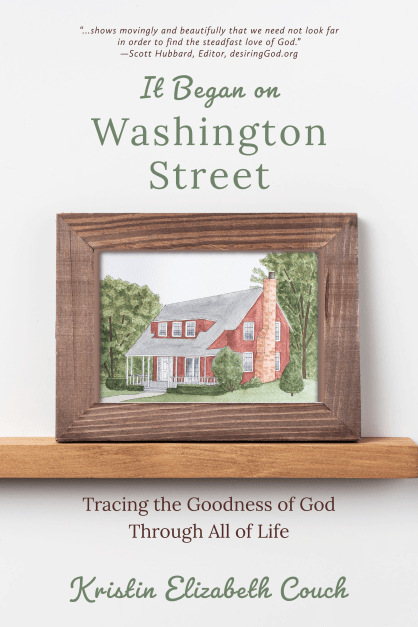
After Washington Street

I was twelve when we moved out of our apartment and into a ranch-style home, a duplex shared with my grandparents, who had recently sold their home on Washington Street.

I had adored our New England farmhouse apartment, the only home I remembered. We were scarcely unpacked from this new abode when I began pining for my former stomping grounds: the pond and fields and forts and gardens and berry patches and obsidian nights with only the big dipper to light the way.

I also ached for Washington Street, the place where my love for God began; the home which burst with the magnificence of Grandpa, who invited my brother and I to fiddle around in sample drawers stuffed with promotional samples that he kept for clients. We galloped on the expansive front porch and played tag in the fenced side-yard, romping with cousins aplenty.

Washington Street was the unchanging place where our family’s heritage was ever on display: etched whale’s teeth heralding our ocean ancestry, spearing those massive creatures of the sea. Curious, heavy trinkets adorned each room: engraved pewter jewelry boxes, delicate bone China, mortar and pestle nestled beneath proper New England furniture, atop Oriental rugs. Even the galley kitchen held memory: Grandma’s famous apple pies and melt-in-your-mouth roasts around which clustered bright, tender carrots, evenly cut and placed alongside pearl onions and new potatoes.

Washington Street also held vivid story of my grandparents in their younger years–ages before I was born. I remained transfixed by the sound of Grandpa’s voice, carrying me backwards in time to their early days together. My grandmother had tripped and lurched headlong down the steep, narrow staircase while holding their newborn baby. A fall that landed them both in the hospital with dark bruises, broken bones, and crushed spirits. I considered this each time I descended those stairs.

This home on Washington Street was a historical mansion to me, built with the hammer and nails of Grandpa’s steadfast love and goodness. I was stunned, as an adult, to learn how tiny their Washington Street home actually was: a mere 1425 square feet. One bathroom and three slender bedrooms which housed their large family of seven. Memory is a funny, tricky thing. I only remembered their home as a structure fairly enormous.

***

Now, decades later, I am growing deeper roots of appreciation for what my grandparents actually did that year we combined our households under one roof with two doors. They paved a way for our family to purchase a home in a place where property prices made home ownership prohibitive. My parents were nominally paid schoolteachers and considering the fact that my brother and I were reaching an age where it would be difficult to continuing sharing a bedroom, something needed to change. Grandpa was paying attention and hatched a plan.

By all accounts, this certainly could not have been easy. Grandpa and Grandma were over sixty-five the year we moved. Grandpa was still a full-time salesman with rhythms of his own, plus a thirty-five-year faithful member and trustee in their church. He had always been most comfortable as a city dweller, inspired by the noise of heavy traffic, the throngs of people, and concrete sidewalks.

This move, some twenty-five miles west of Washington Street placed him away from all jumbled noise and under the hush of mighty trees, chirping birds, singing crickets, and green pastureland. The slow and gentle lilt of quiet, small-town living. Such a change prompted increased driving times, greater fuel expenses, and the sudden need to learn different highways and back roads.

Grandpa managed well, cheerfully disassembling his old home office on Washington Street, before unpacking his new space in our cellar, an office now shared with my father who graded student papers by lamplight. None of these changes could have been easy after decades of routine.

In hindsight, I understand that my grandparents probably could have maintained their daily warp and woof, holding fast to their comfortable habits by asking us to move into Washington Street, the home they had lived for their entire marriage. They might have built an addition and upped their square footage, keeping company with the familiar in their older age. Instead they chose the opposite, for the sake of my brother and me. We had bunches of friends, plus a sturdy sense of time and place in our church and school.

So they invited my parents to dinner one evening, and Grandpa proposed this new venture, as a way to help our family along, while also hinting at their future need for our assistance as they aged. My grandparents were still active and independent, but of course, this would fade, given time.

This move is a way to kill two birds with one stone, said Grandpa with his wide smile.

He was a rare species, our Grandpa. A true gentleman with total class. Insisting that he and Grandma would one day need help was a kindness aimed at preserving my parents’ pride.

I thought little of it at the time, being only twelve, but they sacrificed everything for us. Grandpa took the whole shebang one step further, insisting, on the front end, that this move hinged upon one absolute contingency: an addition on the back of our ranch home. It was to be an enormous family room, full of tall windows to invite natural light, complete with a wood stove and luscious carpet for comfort. Two outdoor decks would hug each side, allowing for perfect grilling space on those hot summer evenings. This family room would be the one shared space in our ranch home, other than the basement.

My parents hemmed and hawed, likely considering this too great of an expense, and one in which they could not afford to contribute.

Grandpa held out his hand, eyes wide and serious. This is my treat. It is for my grandchildren, and for all extended family to gather during the holidays.

My brother and I were ecstatic. The deal was done. We were the luckiest kids alive, with a Grandpa like no other. We thanked him.

Our grandfather had somehow made moving into our new home both a grand adventure and a small happening as he waved his arm nonchalantly.

Anything for you guys, he smiled good-naturedly, just as though we were going out for an ice cream cone rather than moving homes and habits and entire histories while spending his hard-earned savings and beginning afresh.

I can picture him even now in his office, rummaging through drawers of samples as he spoke in friendly tones to his clients by phone in our unfinished basement, beanie perched on his perpetually cold and balding head, Cross pen fastened neatly in his shirt pocket, dress shoes neatly tied and shiny. He steadily worked through any and all interruptions, of which there were now plenty.

Never once did I hear him complain.

***

True love always entails sacrifice, doesn’t it?

I often remember that time of life. That move away from Washington Street, a home so dear, and owned outright, must have shattered Grandpa in a dozen different ways. If it did, we never knew it.

My grandmother, however, took a vastly different approach, head flung back on the new sofa, moaning about having to carry the laundry basket all the way down to the basement. I stayed quiet, observing her griping from a distance, but marveled at her crumpled spirit. Their old washing machine on Washington Street had also been situated in the basement. How was this any different?

And we are now so far from church, and I am not getting any younger, she sighed. This stove is different and I am not used to living in the country–are there bear in these woods?

My brother, backed turned to the lump of our griping grandmother sprawled upon the couch, crossed his eyes for my benefit and made a crazy face. I stifled a giggle.

Plus Marilyn doesn’t style my hair the same way Dottie did. I miss Washington Street.

And on and on and on it went.

It was tedious, I tell you, listening to her complain. When she had lived on Washington Street, she had groaned about the narrow kitchen, the lack of closet space, the postage-sized yard. Nothing was ever right. I realize now that I was unwittingly learning as much from my grandmother as I was from Grandpa.

She was the perfect primer on what not to become: discontent, sulky, temperamental. A natural repellent.

***

When they purchased this new home, it was not, shall we say, move-in-ready. To give context, I hail from a long line of exceedingly tidy women, which is why I tell my family not to necessarily blame me for my freakish OCD cleaning tendencies. My grandmother’s favorite saying was Soap is cheap, meaning anyone can be clean if they so choose. Whenever she crossed the threshold of a home that beheld dust or crumbs or a ring around the sink, I studied her narrowed eyes and pursed lips. She could certainly clean with the best of them, and she did.

So you can understand the horror when we discovered that the previous owners of our ranch home had owned a motorcycle, and had literally, in the chill of winter, changed the motorcycle’s oil in our living room. There, in the middle of a hideously abused rust carpet, lived a dark and foreboding stain. A pool of greasy residue. For the love, can you even imagine?

The kitchen linoleum not only held sticky grime, but also curled at the outer edges, which caused us to occasionally trip and pitch forward, careening into the wall. I remember my parents reminding everyone what the realtor had mentioned ad nauseum–location, location, location. So yes, it was a fine neighborhood, a pretty yard, but the house required work.

The interior walls were infused with a stubborn, smoky tinge, as if the wicks from hundreds of burning candles had joined hands and crawled upward. We scrubbed those walls for days with scarcely an improvement. Also? Our stove could not be cleaned.

My mother tried. Desperately, and for hours on end. Grandma, who had stretched the phone cord into their television room while gossiping to her California sister, announced that my mother had scrubbed to a fair-thee-well, with plenty of elbow-grease, but without luck. Grandma paused, probably hearing my tiptoed footsteps, but as I stood still and held my breath, she continued. And after so many expenses, they cannot even afford a new oven, she whispered. This raised my twelve-year-old hackles.

My father, who descended from a long line of housepainters, gave the entire home a fresh coat of interior paint which infused a clean, comforting glow within each room. It was a gamechanger that served to lift everyone’s spirits. My parents also ripped out the oil-stained carpet, replacing it with a greyish blue plush. The new carpet scent was a fantastic relief, and things were finally shaping up. My grandfather also paid to have our kitchen linoleum replaced.

We finally moved in and began unpacking.

A few days passed splendidly and without incident when my grandparents oven, which was old but at least clean, conked out.

Grandpa knocked on our door and Grandma–who was carrying a generously peppered roast– stepped across the threshold and requested to borrow our oven. Grandpa bent low to open it for her, immediately glimpsed the unsuccessful-cleaning-attempt-situation, and stood upright.

No family member of mine is eating anything cooked in this contraption. His eyes were huge as he closed the oven door firmly and told us to grab our windbreakers. I am treating everyone to Giovanni’s tonight.

I felt like hugging him.

***

Within a week, delivery men finagled two brand new ovens through our narrow front door and into each kitchen. They were exquisite pieces, and we thanked Grandpa, who as usual, had chosen the finest.

He was certainly a Go Big or Go Home man; never one to skimp. Our Grandpa despised fast food, off-brand ice cream, poorly stitched clothes, and shoddy furniture. Everything he paid for was sturdy, made to last, and bought with consideration toward the future.

God saved me, I heard him once say. How can I not give to others?

***

It is not difficult, as Christians, to dress up in our Sunday best for church: dress shirt, tie, blouse, skirt, or favorite jeans paired with good shoes. It is another thing entirely to clothe oneself the Colossians 3 way–setting one’s heart on things above and not on earthly things. As God’s chosen ones, holy and beloved, may we put on compassionate hearts, kindness, humility, meekness, patience, forgiveness. And above all? Love, which binds everything together in harmony.

This is simple in theory yet difficult in practice because it requires dying to our own flesh: our stubborn preferences, our beloved routines of self-preservation and self-care, our wants and perceived needs that are pervasive today. This current mindset of brooding, challenging, and questioning the authority of Scripture–(surely Jesus did not really mean denying oneself, picking up our cross, and following him?) actually encourages division within the body of Christ, and is a mockery to God. If we have been truly redeemed by Christ, we are instructed to seek the things that are above, where Christ is, seated at the right hand of God. (Colossians 3:1)

In humility, may I suggest burning those bridges that encourage such deception? Not in anger or with noisy fanfare, but with the solid knowing that keeping company or seeking advice from those who encourage decision-making based on fleshly desires, following your heart rather than God’s ways, will ultimately harden your soul to the things of God. (Romans 12:2, 1 Corinthians 15:33) Do not be deceived–our flesh is weaker than we believe it to be, (Matthew 26:41) and our adversary, the devil is roaming around seeking someone to devour. (1 Peter 5:8) We become like those with whom we keep company. (Proverbs 13:20)

Truly following Christ will cut the flesh, and deeply. It will cost you, and it should. (Luke 14:33) Obedience and love always involve a measure of sacrifice.

Grandpa lived this. No long faces on his part–bemoaning the challenges, as my grandmother did. His steadfast faith in Christ was his joy. He trusted God implicitly, served others, denied himself at every turn, and kept in step with the Holy Spirit.

***

This is what I now understand, as I remember Grandpa and Grandma while considering the precious faces of my own family:

They will remember the Italian restaurants, the family table, the hey-pal-come-along-with-me moments. They will feel known as I remember their favorite color, favorite team, favorite book, favorite ice-cream. Their heart will feel tended and cherished when I call them by nickname. They will observe how well I live out my faith each ordinary day, and see if I choose to love God through obedience. They will remember if I show my love with abandon, lavishly offering my time and money and home and words–a way of saying “You first.” Most every storm can be weathered by being deeply known, unconditionally treasured, and completely loved, just as God first loved us.

Make no mistake, they will also remember the moaning, the selfishness, the ways they had to crawl around me to see Jesus. They will remember the lack of phone calls, visits, the selfish choices to withhold attention, kind words, gifts, money, and time. It does not matter if I dress up each Sunday and stroll into church while simultaneously choosing to cling selfishly to my rights and my preferences and my way. Faithless Christianity ultimately shows up in unrepentant selfishness, pride, complaining, envying, empty words, and rotten fruit.

I will never forget that Grandpa chose us over his beloved Washington Street home.

And isn’t this true? We are who we are no matter where we live. Being a Christ-follower is not dependent upon a certain street address or zip code. It is wholly dependent up the finished work of Christ, the indwelling of the Holy Spirit as we march forward in faith and dependence and obedience before God, joyfully denying ourselves.

I am not saying that place is unimportant. It is a secondary character within our story, isn’t it? God ordains our steps and places to tend–earth and brick and wood and beam that shelter us. But it is the people within such houses that shape us most.

My faith began on Washington Street, but it did not stop there. Grandpa brought his kindness beyond his cherished home, giving of himself until he died, for love’s sake.

I am still basking in his kindnesses, a flickering shadow of my eternal home with Christ in heaven.

**************************************

(Below are more stories of my delightful Grandpa. My first book is dedicated to him.)

Unspoken

There You Are

Things We Remember

No Strings Attached

Loose Change

A Tree, Severed

Most mornings I take a long, looping walk–nothing fancy here–a worn, comfortable hoodie and ponytail pulled loosely through my baseball cap. Often, I listen to an Elisabeth Elliot podcast, and as her words correct and exhort my spirit, a quickened pace stirs my limbs for the day’s work ahead.

There is so much abundance to be discovered in God’s creation– hawks and songbirds, deer and squirrels, puffs of clouds, sunshine warming blue skies, rain showers, stately trees, scattered flowers, and wild berries. I simply cannot understand how anyone can fail to worship the Creator of such stunning wonder. He is truly the Ruler of all.

I have a favorite spot on these ambles through partially wooded trails. A slim path by the lake where the waters sparkle, the breeze beckons, and the magnificent trees change color by season. This place has become a treasure trove of delight, now so familiar after nine months of walking these paths. Which is why I was jolted as I rounded the corner a month ago. Three of my favorite trees had been neatly severed by chainsaw.

To give context, I have dozens of photos of this triumvirate, taken during summer, autumn, and winter. One magnificent tree–the tallest of the bunch– was so resplendent that it burned in a blaze of yellow during fall. It was remarkable; truly the loveliest tree that I have ever encountered.

So I stood aghast at the sliced logs that had once been a sturdy beacon of beauty, and I pined for what was. Only three short stumps remained. I longed to observe these beauties in the fullness of springtime–and never will.

The reason they were felled?

They hindered the view of golfers as they moved down the fairway.

I know not what to say.

It is terribly sad.

***

This is Holy Week, and we remember.

That same Christ who was adored by the masses in the streets on Palm Sunday, was felled on Good Friday. Our gentle King of glory stood in the Pharisees’ way–he certainly was not the sovereign everyone expected to rescue people from Roman rule. Scourged, beaten, whipped, mocked. Our Cruciform King, nailed to wood, and left to suffer the cruelest, most horrific death.

Why do bad things happen to good people? someone once asked theologian R. C. Sproul. His answer? That only happened once, and He volunteered.

***

God is in charge of absolutely everything: the rising and setting sun, the spinning seasons, the birds of the air, the fish of the sea, the scattered stars twinkling by pitch of night, the story of our birth, the instant of our death, the rescue of his elect.

As Octavius Winslow once noted:

Who delivered up Jesus to die? Not Judas, for money, not Pilate, for fear; not the Jews, for envy, but the Father, for love!

Everything is under God’s rule–to the last iota. He sees what we cannot, and I am steadied by these words of King David:

The Lord is my chosen portion and my cup; you hold my lot. (Psalm 16:5)

He holds our entire lives, our years, our weeks, our days.

1 John 2:17 tells us: And the world is passing away, along with its desires; but whoever does the will of God remains forever.

To accept this truth is to fully live. To welcome the will of God, our portion, moment by moment, worshipping through determined obedience, leads to a tranquil state of the soul, come what may.

***

This morning, upon rounding the path’s curve yet again and encountering those three short stumps, I had a flash of imagery.

Three trees gone. One had been rooted enormous –more grand and stunning and glorious than all.

That one is like Christ, glowing in splendor now, seated at the right hand of the Father. I cannot see with physical eyes but know from the truth of God’s Word that Jesus Christ is fully alive and is interceding on our behalf.

The two other stumps mirror the image of the two criminals hanging alongside Christ at Golgotha. One entered paradise as he acknowledged his guilt and sought Christ for rescue, while the other cursed Jesus and entered an eternity of torture–absent of God. (Luke 23:39-43)

Those three stumps? I now consider them gifts to ponder each morning.

***

This Holy Week, as I read the gospel accounts, may I reverently honor the terrifying beauty of King Jesus, who was tortured to death in my place.

Please–let’s resist the impulse to clean up the cross with flowers or smooth silken sashes, making the scene palatable; attractive. The genuine, gut-wrenching beauty of the cross–a brutal Roman instrument of torture–lies in its horror: our sinless Savior, our Cruciform King hung bruised and bleeding and virtually unrecognizable, weighted down by the sins of his people, arms stretched wide while nailed to a tree, slowly dying. Asking his Father to forgive us.

His torment for our pardon.

May I grieve over my sins as I ponder the heinous nature of the blood-soaked cross. May I mourn and repent. And then may I give thanks as I sing reverent praise for the beauty, the holiness of the empty tomb. A miracle. Our Risen Savior.

Every single breath of every single day is a cause for Easter celebration. Jesus Christ is fully alive.

Take the time to consider those quiet glories granted in human hardships. We are gifted to join in the fellowship of His sufferings. Those proud, rebellious, stiff-necked people that mock us for our faith? We were once as dead in our trespasses as they are now, but have been made fully alive, gifted by God with faith in Christ. Pray for those that hate and persecute, and then carry on in clarity and in boldness of faith.

Make no mistake–our wounds, those whippings we experience for obeying God, will yield scars. But remember too that such markings will fall earthward, to be replaced with heavenly rewards as we enter eternity and walk with Christ, upon streets of gold.

The only unfading scars in heaven? Those treasures remain on the hands and feet of Christ Jesus–an unending proof of his obedience and perfect love. (Revelation 5:6)

Scars of beauty. Scars of abundant life–giving us an eternal reason to rejoice.

***

No doctrine is more excellent, or necessary to be preached and studied, than Jesus Christ, and him crucified.

(John Flavel, Puritan 1671)

My Brother

He was my first and dearest friend, my steady childhood playmate. Despite divergent personalities–or perhaps because of them–the two of us got along like a house on fire, spending our days romping in the fresh, New England air.

We twirled on tire swings and scratched in the sandbox under the crooked crab apple tree. We built forts in the front woods, cruised on Big Wheels, and challenged each other to hula hoop contests. We hosted picnics under the maple tree, and slung ratty life preservers around our necks as we pushed the tin rowboat from shore to pond. I relied on my brother to capture baby turtles and frogs which I adopted for an hour or two–pretending they were my very own pets. Our greedy hands plucked juicy garden raspberries, blackberries, and Concord grapes–fully warmed by the sun–as a late afternoon delicacy. Nothing tasted finer.

***

This younger brother of mine, nineteen months my junior, recently called to wish me a happy birthday–the big 50. I did not have to wait long for the jabs to begin.

Happy Birthday, Sister. Have you been fitted for your hearing aids yet?

I groaned.

His wife was on the phone, too.

I know, she sympathized. Fifty is different, isn’t it?

My brother sighed. I really wouldn’t know, ladies.

Ever the wise guy.

He is married to a woman who is his perfect match–giving it right back to him–times two. Their love is an ongoing banter, and their four lovely daughters smile at him, with: Oh, Daddy.

I remember one afternoon– years ago– lounging, elbows resting countertop, as our big family chatted around their kitchen island. As my brother sliced vegetables in preparation for a late dinner, one of his little girls, sporting a nearly toothless grin, wandered into the kitchen–reluctant to ready herself for bed.

He looked up momentarily, never missing a culinary stroke.

Say goodnight to everyone and go brush your tooth.

Daddy! she said as we laughed.

He is forever cooking or baking something savory. It is a hidden love language, buried beneath mountains of sarcasm. In fact each year, at the first whispers of fall, he slips to the kitchen early, pouring himself coffee while pulling out bowls and whisks and spatulas–baking up several loaves of mouth-watering pumpkin bread. His girls awaken to the spicy scent of autumn–an aroma cloaked in their father’s love.

***

I remember keeping him company on another occasion as he concocted fajitas. This is what I treasure–being summoned into his arena–Come over here and keep me company–as he seasons, dices, chops, and measures. It warms me to be welcomed. A healing balm as he positions a steaming mug of coffee–cream only, right?–directly before me.

His forthright New England sensibilities are deeply familiar and I behold these moments with silence. If I speak of his goodness, honoring this golden treasure with words, the moment might be shattered by humor. So instead, I listen as he shares inner intricacies. The coffee and cream warm my bones–a mug of knowing and of shared bloodlines–we know what we know, together.

The fajitas.

He’s working, slicing chicken with precision, cubing Vidalia onions, cutting red and yellow peppers julienne style–with an ease bred only through repetition. His wife enters the kitchen as he angles the vegetables smoothly down the cutting board, gently guiding by way of knife, the cluster momentarily air born before landing with a sizzle in a pool of scorching olive oil. As it crackles, he gives his bride a cursory glance and says with that dimpled smirk: What are you, lost?

She rolls her eyes at me before dishing it right back.

Well, you do need a map for our kitchen he quips.

Always the wisenheimer.

But don’t be fooled–I have seen behind the bravado.

This man is tender and kind.

***

My mournful, larger-than-life wish, as a child, was to have a dog. In fact, my few childhood dreams remained clear: get married, become a mother to many, always have a dog, and write.

First? The dog situation.

Up until I was twelve, we lived in an old New England farmhouse, divided into apartments. Our landlord, who tended this ancient family property with precision, was a gruff yet tender-hearted man. His name was Mr. Golden, and his one unwavering rule for all apartment dwellers was firm: no pets.

One spring, as flower pollen dusted the breeze, my friend’s pet rabbit birthed many kits. In a remarkable and highly unexpected twist, Mr. Golden relented of his ruling and even offered to build us a marvelous wooden rabbit hutch, to be positioned behind the garage. He hammered and sawed and blew off the sawdust in what he referred to as the breezeway–a narrow, screened-in space connecting the main house to the garage. It was his workshop.

This good man measured twice and cut once, drilling and sawing and smoothing to perfection. The front portion of the hutch was enclosed with thickly wired mesh screening and the back area, cupboard-like, was fashioned with the finest wood–a safe, snug space–plumped with a bounty of hay. Our new pets hopped through that tiny rounded opening and fluffed themselves on many cold, star-studded nights.

Flopsy (my brother’s rabbit) and Thumper (mine) eased my tender dog-ache. In fact, they were the next-best-thing to a canine. We had a grand time, crafting pitiful leashes out of string which the rabbits immediately severed by tooth. Mr. Golden then donated scraps of wire with which to create a safe enclosure –a backyard playpen– for our bunnies to romp. They nibbled the emerald grass, noses twitching at such good fortune, hopping about in utter delight.

We fed them twice per day–as the sun peeked out in the eastern sky, and again as it bid farewell in the west. An old tin coffee can served as our feed scoop. My brother disliked the dark, and hovered behind me, clutching the back of my jacket on those late night feedings as I marched to the backyard, coffee can full.

***

One bright fall afternoon after school I meandered outside to retrieve my bicycle from the garage. I paused, hearing an odd noise. Was that Mr. Golden working in the breezeway?

I stood, statue-like, listening. It was a low, chesty growl, echoed by other snarls.

I dropped my bike and flew to the rabbit hutch.

The Granville’s dogs–three of them–were growling and tearing at the wire cage. I had been admonished to steer clear of these beasts, who were kept as guard dogs further up the street. The Granville family–a chain-smoking bunch who preferred the dimly-lit, indoor life–posted BEWARE OF DOG signs about their property–dotting their fences, doors, and windows liberally, if not crookedly.

I had been duly warned–these dogs were dangerous.

At this moment I did not care about such trivialities. They were trying to eat our rabbits and my protective instincts crushed all wisdom to bits. I lunged for their collars and began dragging them–or trying to–away from our two terrified rabbits who sat stiff and huddled, round-eyed and still.

Stop it! I screamed, yanking hard at their worn collars while they snapped back, fighting against me and pulling for the hutch.

Mr. Golden came lumbering around the corner as fast as his old legs would allow.

Kristin! he hollered. Stand back!

I must have hesitated.

NOW! he thundered.

I let go and tripped, scrambling backwards. Mr. Golden heaved a heavy wooden plank high over his head, and brought it down hard with a thwank on one of the beast’s rear-ends. The dog winced, a terrible and high-pitched sound, hightailing it out of our yard. His brothers wisely followed suit, slinking away while panting, drooling, and glancing back at the hutch.

Mr. Golden’s wiry eyebrows furrowed, and he looked fierce.

That was THE STUPIDEST thing you ever did, Kristin, he yelled.

His face remained contorted as he pulled a handkerchief from his back pocket and wiped his sweating brow.

But–I began.

Don’t you “but” me. They could have torn you to shreds like that, he said, snapping his fingers.

I hung my head and began to cry.

Now don’t go bawling like a baby. He dabbed at his forehead again. It’s okay for now, and I understand why you protected your critters. He rested his hand on his hip, staring far off into the fields, chewing his bottom lip.

The wind picked up.

I sniffled.

I am concerned, young lady. His voice quieted. Vicious dogs like that have a long memory. That wild look in their eyes– he paused. They’ll be back.

***

On a cold November day, weeks later, the trio escaped yet again and knew exactly where to go. When my brother and I returned home at dusk, just in time to traipse to the backyard with our coffee can, we found only a toppled and misshapen cage, door flung open; bent on its hinges. A slender trail of blood speckled a path leading back to the woods.

I wailed until I could scarcely breathe. My mother rushed me inside, while my father and brother bundled up in layers, grabbed two heavy flashlights, and ran for the woods.

I was a realist even then, drawing comfort in actuality. I whispered the truth to myself on repeat as I paced before our dining room window, crying, heart split wide.

They will not come back with Flopsy and Thumper. No rabbit could ever survive those vicious dogs. Never ever.

I was partially right.

***

My father and brother eventually returned, red-cheeked and shivering, but clutching my terrified Thumper. They had caught her red eye glowing in the flashlight’s beam. The poor thing had been huddled between a rock and branches that snaked through the undergrowth of autumn’s crunchy leaves. Flopsy, my brother’s rabbit, was gone. Nothing remained except a sizable pool of blood and a few puffs of fur. I cried, feeling a widowed, desperate ache for my brother.

It was much, much later that I learned more. As they hurried back home holding my Thumper, my little brother brushed tears from his face and tugged my father’s sleeve.

If we could only find one, I am really glad it was Kristin’s rabbit instead of mine.

Dear, dear boy.

***

To the outside world, we all grow old. But not to brothers and sisters. We know each other as we always were. We know each other’s hearts. We share private family jokes. We remember family feuds and secrets, family griefs and joys. We live outside the touch of time. – Clara Ortega

***

Decades pass, we both graduate from college, marry, and are gifted with four children apiece. We live over a thousand miles apart, and life keeps happening. Years swirl and leap ahead as we spin around and around the sun.

And then one summer creeps in, unsuspecting, and hunts us down.

It sliced in a hundred different ways.

***

There is a devastating beauty and holiness forged from the uninvited terror called suffering. God allows it. To believe wholeheartedly in the Sovereignty of God is to get out of the way, to grow small on bended knee, to raise your hands in open surrender–an offering to Him. This faith precedes all end results, and is not dependent upon a certain outcome. Our Maker knows what he is doing.

This is awfully difficult to see as the fire burns hottest. Hold on, hold on. God is building something holy from the ruins. He always does, yet it feels like an impossibility to our tender, finite skin.

***

I am scrubbing dishes so carefully at my brother’s kitchen sink—and everyone—my family, his family, and also his mother-in-law are savoring this evening in their backyard. I see them now—football flying, soccer ball bumping against the slope of hill pressing into a slow, summer sunset. The girls’ ponytails swish as they chase their cousins.

But all I can think is: Clean up. Make things sparkle.

This relentless drumbeat pounds in my head, formed by the recent months of pain inflicted upon our family under the guise of Christendom. Those who were supposed to love us most, loved us least. It was the Granville’s dogs all over again, but instead masquerading before the world as well-behaved pets. My brother plowed through the smoke and mirrors, glimpsed this unfolding nightmare, and plucked us from the flames.

Now just removed from the situation, I am in the pull of severance—a cutting off of a life that I knew. Suddenly there is a before and an after to my frame. What will I do with this cup of suffering? How will I learn to forgive those that are not sorry and refuse to repent?

Tears spill as this soapy water burns hot, but I don’t mind the heat. It is the one thing that feels real, honest beneath my hands.

I hear laughter—what common grace!—and move to the window and watch as my brother’s mother-in-law pats our son’s back with a smile, before enveloping our daughter in a warm, grandmotherly hug. Gentleness radiates this woman’s being—a rising sun—and I know in the depths of my being that we are welcomed here. Her dear husband, the love of her life, collapsed and died but a month ago. She graciously tucks the swell of her sorrow into a temporary drawer in order to bear the crushing weight of ours. This summer has threatened to undo us all.

My brother, too, is in a hard place, now caring for his family and his mother-in-law, while tending to this fresh loss of a father-in-law that he adored. All of this plus carrying on with his job, and now tending to our grief-stricken family of six for the next few weeks.

Yes, we had all been dipped low, low into the well of suffering. In time, and only in that pitch black space, would I ultimately learn to hold fast to nothing but God himself. 

I submerge my hands again into the scalding dishwater, and notice a stubborn dark fleck on the white dinner plate. No matter how hard I scrape it remains. So I scrub harder and faster and—

Kristin.

My brother is here, next to me.

Put the dish down. You don’t need to clean right now. I will load the dishwasher.

His hand is gentle but firm on my arm as he takes the plate from my grip.

Actually, you don’t have to do anything. You and Jon and the kids are family, and we want you here. There is nothing to be earned.

It will be a long time before I see the mercy in his words.

***

He is a sort of Renaissance man—bright and capable and gifted in much—but will retort a quick comeback with any hint of praise. He has been a volunteer firefighter, a newspaper man, a salesman, founder and owner of a granite business, and a financial planner. It did not take long for his passion in financial planning to land and shine brightly upon those families with a Down syndrome son or daughter. He has carefully designed blueprints to offer such parents–mothers and fathers faced with the likelihood that their special needs child might outlive them. It is a delicate and beautiful and hope-filled work.

He was born to rescue–do you see? Gifted with mercy.

***

Suffering, I have come to know, is not always linear, clear, or heralded. It often cuts jagged, complex, and hidden. But there is a treasure buried in trials, an inherent tension between suffering and glory. In the hottest fires, there is a sifting at play. The gold eventually rises–separating itself from the sand.

The kindness of my brother? Gold.

Beauty from the ruins.

***

He pulls a soft loaf of bread from their breadbox, lining up slices for his daughters’ sandwiches. Deftly, he smooths the peanut butter from edge to edge and then jiggles grape jelly generously over the second slice before pairing the two.

Girls! he calls as he neatly quarters the sandwiches and assigns them to four plates. Tell Aunt Kristin what my secret ingredient is for my famous PB & J sandwiches?

They gather around and grin shyly at me.

Love! they answer in beautiful chorus.

I laugh and nod.

It sounds just right to me.

Consider the Birds

It was only a sore throat and negligible fever. Nothing too terrible, but enough to slow me. My body was bidding me to rest.

So I sank into our oversized chair, living room windows flung open in salutation to glorious springtime weather.

For the first afternoon in what felt like ages, I was not required to go anywhere, nor to do anything.

So I befriended stillness in the quiet of our home, a blanket soft upon my lap, sipping hot tea mixed with crushed lemon wedges–fighting off chills that tend to accompany fever. Closing my eyes and releasing a long, deep breath, I felt the tightness in my shoulders begin to subside.

My auditory senses stirred. A gentle Tu-a-wee! tu-a-wee! of a bluebird filled our backyard, cascading through the breezy window screens. And then? Only the distant barking of a dog.

A peaceful quiet fell, hushing my mind as a faint rustling breeze brushed the swaying treetops bordering our yard.

I listened intently; eyes closed.

After awhile the bluebird trilled again, adorning the stillness with a gentle melody, low and sweet.

***

I would like to paint the way a bird sings, said French painter, Claude Monet.

We have no fewer than three of Monet’s paintings adorning our home. His work gives me pause to consider, as I gaze at such soothing renditions of nature affected by light. He accomplished his wish–to paint the way a bird sings–soft brushstrokes, brilliant hues, fashioning a melody for the eye to somehow hear rather than see.

Monet was masterful in dotting the canvas–stand too close and you will miss the glory of each painting. It appears thickly dotted in layers- swirls of seeming nothingness. Yet step back three paces and witness the exquisite scene captured through such impressionistic artistry. A wonder of surprise–such a feast of color and presence minus constrictive, heavy lines.

Majestic.

A birdsong for the soul.

***

Look at the birds, who neither sow nor reap nor gather yet are fed by God (Matthew 6:26).

As I sat in afternoon stillness, watching the shadows gradually crawl and slant, I considered the birds.

God’s creation, sustained by him and for him–stunning little cheeping creatures. They warble because they were made to sing–giving no thought to their next meal, or worrisome weather, or future concerns. They are free to soar.

***

I have grown to absorb this ministry life–my husband is also my pastor– in the same manner a paper towel, corner dipped then held in a swirl of grape juice spilled countertop will gradually absorb and hold the entire puddle. The paper towel does not rage–instead it carries the weight of the liquid dutifully. That paper towel, once stiff and square and glowy-white eventually grows tired and limp from clutching the unending messes. The juice is always spilling. Again and again.

So I sit here and my sore throat and fever are the least of my worries. Mentally, I tick off one, two, three, four, five plus ongoing ministry issues. I inwardly groan–enveloped by the weight of it all. I am a soggy paper towel, weighed down by purple juice.

Honestly? I bear little resemblance to that sweet bluebird trilling outdoors.

As I rest–eyes closed–I ponder the power of God to sustain. He cares for the birds, and so much more for me. He sees it all as he engineers the entire world.

If I choose to stand too close to these ongoing concerns — thick dots smattered on the canvas–I lose the panoramic view of the stunning painting–the eternal landscape glowing with the light of Christ.

Three steps back, Kristin, I remind my exhausted heart. Trust God. He knows precisely what he is doing. So I mentally heave the entire sum of heartache before God, a Yes, Lord, as I place everything back into his hands.

As if on cue, the bluebird chirps again, and I smile through my fever.

God is near.

Humble yourselves, therefore, under the mighty hand of God so that at the proper time he may exalt you, casting all your anxieties on him, because he cares for you. Peter 5:6-7

Ties That Bind

He is too young, I said, standing wide-eyed before my husband, stunned by our son’s afternoon profession.

Although we encouraged group activities, a mix of boys and girls, Jon and I chose not to allow our children to date until they turned eighteen.

This made us wildly unpopular with pretty much everyone.

Marcus, only fourteen on this particular day, had appealed to me a few hours earlier, during an ordinary walk around the lake. Zero segue–one moment we had been discussing music lessons, sports, the usual things. This reticent son of mine certainly seemed chattier than usual. And then, as we rounded the final bend, I fell capsized:

I met this girl, Taryn, at youth group, Mom. She is really pretty and nice and she likes me. A lot.

Oh, my heart.

Breathe, Kristin, breathe.

My next thought? Of course she likes him. Tall, handsome, quiet–what’s not to like?

But aloud: I am sure she does. But you are fourteen, honey, and there is no dating for four more years.

His face fell.

Striving for good cheer I continued–But I do encourage you to participate in group things!

I knew you’d say that. He looked at the ground, clearly crestfallen. Can you make an exception? Please, Mom?

I slowed my walking and turned towards him. No, sweetheart, I cannot. Fourteen is far too young to date.

I assumed that was the end of it. A passing crush.

***

We were living in Florida at the time, in a town known for its winter strawberries and small town charms. A pleasant place with kind people. In this southern town Yes, M’am and Yes, Sir punctuated most sentences–uttered to anyone and everyone. It felt like walking through perpetual confetti, falling earthward.

To neglect these niceties was to break the eleventh commandment.

I jest, but you get the idea.

Regardless, here we were. Following a tedious string of unwanted and excruciating events, our family was trying to heal and move forward. Personally, I was morphing invisible for a time, hiding out in our new home, perpetually red-eyed from private, daily crying jags– while Jon continued his preaching ministry travels. We were now less than thirty miles from our former pastorate, but it might as well have been a thousand–culturally speaking.

In this new-to-us town boys and girls become sweethearts in grade school. Pairing off was encouraged; championed. Dating? A right of passage–it’s what we dostart ’em young.

Our opposite approach caused confusion. In fact, I might as well have been speaking Greek.

Eighteen years old before being permitted to date, Kristin? Whatever for?

So there was this whole When-in-Rome type of pressure.

A picnic of a time, I tell you.

I was overwhelmingly frustrated. Number one–I did not want to live here, and Number two–I did not understand why God had allowed our family to suffer and then land in this spot for no apparent reason. I begged God to change his mind about our entire situation, also pleading for him to kindly provide an escape out of this new life where I felt like some sort of outlier. To be clear, these were not casual prayers, whispered half-heartedly. I dropped to my knees daily, elbows planted on our bed, silently wailing. I pleaded for relief from this crumbling landscape that had become the unbidden reality of my existence. Not only was I relentless in my groanings, but I was also exhausted at a core-level.

Time passed. Nothing changed. I grieved.

This was the ongoing narrative for quite some time.

It is astonishingly clear to me now, many years later, that I held fast to the same heart posture as our son–pleading for an exception rather than trusting God’s plan with whole-hearted surrender. The very thing that I was attempting to teach Marcus (Your Dad and I love you so much and we know what is best for you in the long run!) is precisely what I needed to embrace from my Heavenly Father.

So I had a thickly tied scroll of tough lessons to learn–chiefly this–God is good when things are going swimmingly, and God is good when plans are upended and life is a mess.

Every moment of our life is a link in a chain of loving, holy purpose.

I see now what I couldn’t see then.

But first some suffering was gifted to me–a relentless burning off of my will–replaced with devotion to only God and his will–no escape clauses permitted.

***

Beginning when they were tiny, I taught our children to answer with Yes, Mommy, and Yes, Daddy, looking us squarely in the eyes as we gave instruction. This was intentional–I knew that not every adult was well-meaning, and I wanted to reinforce to them that they answered to us–as their parents. We taught them to be respectful towards others, saying hello when spoken to, but unless we informed them otherwise, they were to obey only Jon and me.

My children’s swift obedience to me was paramount–I answered directly to God, who had loaned me these four beauties. If they could not learn to obey us, they would have great difficulty submitting to the Lord.

One July morning, Marcus put me to the test.

***

It was hot. Killer temperatures hovering over one-hundred degrees. I tossed beach towels and goggles and sunscreen and floaties into my oversized canvas bag. Gathering my sweet brood, we flip-flopped to our community pool–meeting a new friend and her children.

Marcus was three at the time, and quite the little fish–swimming for hours on end. He was our quietest, my adorable introvert. He rarely complained, loved the great outdoors–digging in the dirt and planting sunflowers–and enjoyed riding bikes with his brothers (he skipped training wheels altogether and took off down our street on a bike before turning four). I have a precious memory of Marcus buckling his small tool belt around his waist and traipsing behind Jon who was repairing things around our house one Saturday morning. Marcus loved to work.

What he did not care for were strangers.

So we arrived at the pool and jumped in. This new acquaintance from our church swam over to us. She was a large, formidable looking woman–with a heart of gold. I was delighted to grow our friendship.

So I made the initial introduction–This is Marcus.

Hello, Marcus! she smiled.

He looked away.

I pulled my floating son towards me.

Say hello, Marcus.

He said not a word.

Marcus, say hello.

He shook his head, only slightly.

Scooping him up, I excused myself as we disappeared behind the expansive pool shed, where I knelt directly before him. The pavement was hot.

Marcus, you disobeyed me. It is polite to say hello to an adult when Mommy or Daddy are with you. I am going to spank you for disobeying me. And then, we are going to go back to the pool and you will say hello to Miss E.

His full lips quivered. But I don’t like her.

I assured him that regardless of this fact, he must be polite and respectful and say hello. After that he could swim and play with his brothers.

Do you understand me?

Yes, Mommy.

When we walked back to the pool, I was confident that he would obey, and we could carry on with our visit.

I was wrong. He refused.

Now I was deeply embarrassed. I scarcely knew this woman, and how could I ever explain to her that this was beyond unusual? It would have been easier to let it go, but I knew that this was paramount. I was raising this beloved little boy to be a man. I desired godly character for each of our children, and was willing to go to war to obtain it. This was clearly a struggle for authority–a battle of the wills. If I allowed his disobedience to go uncorrected, why should Marcus ever trust me to follow through with anything again?

So behind the pool shed we flew, where the exact same dialogue and spanking and instructions ensued.

To no avail.

I was dying on the inside, but remained outwardly calm. I could be stubborn, too–and was prepared to stay here all day–come what may–and see this thing through.

It took four times before Hello, Miss E. flew from his lips.

Marcus had finally relented.

Something important had been settled.

***

It was now a handful of years after that swimming pool escapade. Christmas was fast approaching, and our children were excited to visit Christmas Lane.

Each year, a good farmer opened his property for this annual event, which stretched through the entire month of December. His land was decorated with strings upon strings of Christmas lights and bunches of jolly decorations. Games and cocoa and gigantic hot pretzels were available for anyone who was willing to pay a few dollars.

People arrived from far and wide to enjoy this generous endeavor. The simplicity and family-oriented fun felt like a gentle pause from the hustle of the holiday season. The most anticipated event for the small children was a train ride. Youngsters under a certain height were eligible to ride this miniature, slow-moving locomotive.

Marcus was tall for his age, and exceeded the allowed stature by several inches. On this particular night, a kind man working the ride–in a measure of good will–waved Marcus through, rightly perceiving Lauren’s wish to have the comfort of her big brother aboard.

So Lauren sat next to Marcus, who was hunched inside the caboose as the train left the station. He was wearing his favorite new shirt of brown and blue–I will always remember this–the words Big Rig scripted on the front. My heart swelled. I loved him–this young, tall son with a huge heart–caring for his little sister.

What I didn’t know?

Marcus’s future wife was standing in line behind him.

***

Taryn and Marcus hover at our kitchen island now, and this son of mine, ever-carnivorous in his eating preferences, is rolling sandwich meat paired with sliced cheese–popping the entire feast into his mouth. Taryn says something and rests her hand on his arm, diamond glistening through a beam of sunlight flooding our kitchen window. Marcus tosses back his head and laughs. This is my absolute favorite thing he does–unscripted and so him. Taryn laughs, too, long hair cascading down her back. She is glowing and beautiful.

Not only are these two in love, but they also really like each other. I tuck away this golden charm of memory–this kitchen scene–a keepsake to add to my growing collection.

And suddenly, with a slight tilt of her head, I am reminded of something.

What is it?

Yes–a photo of Taryn’s father that I once studied. She looks like him now.

He died of cancer when Taryn was young. This giant of a man was tall in stature but even more so in faith. By all accounts he was exceptional–loving God and his family well.

Jon and I wish that we could have met this man whose daughter is now woven into our family tree.

And then, one mundane afternoon, Taryn discovers a photograph that changes everything.

***

On the evening that Marcus and Lauren were enjoying the train ride at Christmas Lane, Taryn’s family was living in a town of some 30,000 people. We dwelt in a separate town–population pushing 35,000.

Remember, Christmas Lane was open for hours each evening, for an entire month.

Odds and ratios are certainly not my specialty, but consider this:

Our two families were present at Christmas Lane on the same night and at the same time. Two families who had never once met, lining their children up for a photo at precisely the same moment, and side by side. Taryn’s shirt and a third of her face is on the border of my photo–Marcus’s shirt is hovering in Taryn’s mother’s photo.

Taryn’s father was also there that evening, and it is not difficult to conjure a snapshot of he and Jon nodding to each other as men do, smiling large– delighted by a crisp evening, their beautiful children frolicking in the hubbub of Christmas anticipation–a night where all seems right.

***

Marcus and Taryn proved patient, and group activities prevailed for years. Those group activities often included our family, and it did not take us long to understand why Marcus fell hard for this girl. He loved her and so do we.

I have watched these two grow and submit to God. That strong-willed little boy from the swimming pool is now a man of godly character. He is preparing to love and shepherd his soon-to-be wife.

***

When Taryn discovered the picture on Shutterfly, we squealed and she immediately phoned her mother. It was exhilarating, and gave wings to many hardships.

This was a watershed moment–I had begged God to rescue me in my way, and in my wisdom-and he said no. He had grander plans: authoring and orchestrating this entire love story.

Remember this–when God declines our requests, he is also inviting us to abide: Trust Me.

If I had been granted the answer that I had longed for, Marcus would not have met Taryn when he was fourteen, and we would not be anticipating this June wedding.

God does not always choose to reveal the why behind his plans, and he doesn’t have to. Without faith it is impossible to please him. But on occasion, he gifts us with glimpses of his fathomless wisdom, and it is humbling.

Thank you, God, for giving me your will and not mine.

***

In mere months–after the sun shines hot before dipping low in the western sky, casting evening shadows against majestic mountaintops–Marcus and Taryn will exchange their wedding vows and begin the journey of a lifetime.

What therefore God has joined together, let not man separate. Mark 10:9

Tell Me Something True

One spring day during my university years, I entered our chapel service, thumped my backpack on the ground, and slipped into the auditorium’s cushy seats, waving hello to friends.

I remember a speaker–holding up a glass jar–laughing while singing a snappy tune.

It’s the fun jar time, it’s the fun jar time,

Everybody loves the fun jar time.

Here’s the story.

***

I was a girl uprooted from New England, replanted for collegiate purposes in the Midwest, where fields of tasseled corn grew tall and stretched wide. Folks from Indiana spoke in a leisurely drawl. Buggy instead of grocery cart, pop rather than soda, and tennies in place of sneakers. My roommate, upon seeing something she liked, squealed Oh, for cute!

I was dwelling in a foreign land.

People here also tended to dabble in aggravating sentence structures: Kristin, want to come with?

It drove me mad in a fingernails-down-the-chalkboard type of way.

While this entire Midwest culture was slower, softer, and informal in speech, it was nosiness that ruled the day. Private property and solitude? Flung to the curb! Everything was fair game–wide open for discussion and dissection. It felt unnerving to my bones–persistent and borderless.

My new friends could not believe I was from New England–Where is your Boston accent? they ribbed, before saying Park the car in an overly-clipped manner, abandoning all letter r’s.

I told you I am not from Boston, I sighed, laughing while rolling my eyes.

The differences did not end there.

I was spiritually floundering. Although I attended both chapel and church services regularly and nodded appropriately during our hall’s weekly Bible Study, I rarely opened the Scriptures. My heart flip-flopped as I sat alongside girls who comprehended so many interesting Bible truths. I felt exposed–for the first time grasping how little time I had spent with God.

The dark bottom line? I was a baby Christian who had remained an undernourished tadpole, circling in the shallowest of waters.

***

The week I arrived on this pretty university campus, staff herded all freshmen into the university’s chapel, treating us to a summary of the Bible taught through rapid hand motions. Creation! Fall! Flood! Nations! the folks on stage chanted, hips swaying, hands whirling. The one I remember best–namely because they screamed it–was: Moses said, “Let my people go!

What were they even talking about? The entire scope and sequence of the Old Testament, following original sin in the Garden of Eden, was mysterious. I certainly remembered scattered stories from my childhood–Noah’s ark, Abraham wielding a knife over his restrained son, Isaac, Samson (of long and flowing hair) toppling columns in mesmerizing strength, and David slinging a stone, striking Goliath squarely in the forehead. A sudden, thumping death for this formidable giant.

These were stories centered upon brave men, not God.

I stood in that whipping Indiana wind–a girl clutching her satchel of random tales about an obscure, ancient people–completely missing the crucial, overarching truth of a sovereign, unchanging, and holy God. A good and mighty Creator who never ceases weaving his magnificent tapestry, generation by generation, with brilliant, eternal purpose.

So yes, I lacked context. Truer still? I lacked the Bible.

I did not pine for the breath-taking story of Redemption, a steadily flowing stream from Genesis to Revelation. Why? I was not tending to my soul, digging into the deep, rich soil of God’s Word. Even now I can still recall that hollow, destitute feeling.

How was I supposed to climb out of this dank, inky pit and into the sparkling sunshine?

I languished for a time, floundering in nonsensical helplessness–before reaching to fix myself by trying harder rather than reaching for God himself through his Word. After awhile, my worn-out, broken-down bootstraps could no longer be yanked up, even as I persisted, jaw set–You’ve got this, Kristin.

But of course I didn’t have anything, other than a pile of sin, sorrow, and a pathetic fix-myself mentality. My neglected bridge to God remained creaky and weed-infested. A draw near to God and he will draw near to you, but in complete reverse. I was hurting.

During that spell I could not even have articulated the meaning of repentance, which was the precise remedy my withered soul needed–in the very way a parched, dying man requires water.

So when I meandered into chapel that morning, please understand that I was perfectly ordered in appearance– pretty clothes and shiny hair and tended makeup–smiling, laughing with friends. I’m fine! I’m fine!

My soul was anything but.

***

The speaker that particular morning was delightfully engaging, a consummate wordsmith who seized our attention. After a few minutes of verbal pleasantries, he opened his Bible and read. My eyes filled–I was pierced by the verses and did not know why. I remember thinking:

Tell me something true.

Pleasetell me something true.

He paused and quipped that this was a lengthy text, especially for exhausted college students.

Wake up everyone! It’s the fun jar time! he began singing the little song, laughing good-naturedly as he grabbed his glass jar and plucked one of the many pieces of paper from within, reading a scripted joke.

Fifteen hundred people roared.

I probably smirked too, keeping up appearances even as a catastrophic feeling crept over my throbbing heart. Jokes weren’t going to help the state of my soul and I knew it. He chose to carry on with feel good speech–eclipsing the meaning of the text.

The fun jar was a stealthy diversion–glossing over truth in favor of popularity, humor, and applause.

***

I could blame my collegiate lack of Bible knowledge on a plethora of things, such as–please take your pick–lack of structured Bible training, lack of accountability, a youth group that fed us pizza and took us skiing and offered glow-in-the-dark frisbee games, smothering our group with pleasure (Fun Jar time! Fun Jar time!) before doling out a serious, lengthy list of Thou Shalt Nots, fingers pointed.

But the honest-to-goodness reason for my lack of godly living was this: I did not pick up my Bible and dive in. Reading and meditating to commune with God, reading to know and understand what pleases him, reading to order my life under his authority, reading to saturate my thinking with truth, reading to nourish and change my heart.

The Bible is life. And while each person must work out their own salvation with fear and trembling, (an individual task), remember that Christ died for his people.

He did not die only for me.

If only I had seen the significance in college as the Bible leaders chanted: Moses said: Let my people go!

God placed Pharaoh squarely on the throne to resist the Almighty himself, so that God’s power would blaze in unequaled majesty. God had a plan to save his people, to bless them as a nation. A familial line ultimately leading to Christ Jesus, our Redeemer.

Today God is still rescuing his people from every tribe, tongue and nation.

Have you considered that we, as Christians, do not know who these people are? It could be anyone. God has chosen, and that is his perfect doing. Our work? To tend to our own souls, to be spiritually well, feasting on Scripture and generously sharing the rescuing power of Christ Jesus.

We do not exist for ourselves, but for God and for others.

Think of it! Our Maker chooses to use us to speak truth about himself. What we say, what we write, what we teach, and what we pray matters. Always. It is not only about our own souls, but for the bride of Christ, his people, his church.

***

I was that college student desperate for truth. A girl pulled in by the Bible verses read in chapel, and of course I wasFor the word of God is living and active, sharper than any two-edged sword, piercing to the division of soul and spirit, of joints and marrow, and discerning the thoughts and intentions of the heart. (Hebrews 4:12)

Living. Active. Sharp. Piercing. Discerning.

We cannot thrive without it. Consider your soul, which will outlive your temporal body. Tend to this space, and do not grieve the Holy Spirit by dismissing him, but instead rightly order your life by the precious Word of God. It will look different from the world, and it should. Strive to be winsome, but at some point your sober-mindedness will offend, and that is as it should be.

I remember being that floundering collegiate girl who slowly awakened to the depths of God as the Holy Spirit worked in my soul. A flicker that in time became a candle that became a torch as God pursued me. In His kindness he transplanted me firmly back into the pages of Scripture, completely reordered my priorities, my soul, and my entire life.

***

There is a time and a place for Fun Jar games.

But in Church, Chapel, Sunday School Class, Bible Study, or Youth Group?

Please–No.

We need God’s Word in order to truly live. Speak it, write it, pray it, share it–without apology.

And tell me something true.

It Began on Washington Street

I am happy to tell you that a portion of my blog has now become a book!

It Began on Washington Street is in honor of my grandfather. Sixty-five stories turned chapters, with an introduction and a beloved photograph, too.

Here are a few sentences from the introduction:

I invite you into the broken and beautiful stories of my simple, ordinary life. In this book, each stand-alone story will spark familiarity, warming you with the overarching promises and truths of God. Our tangled, knotty lives hold purpose, are authored by our Creator, and deserve to be told.

I am grateful for you, my small, blog-driven readership. It is my prayer that you will enjoy, savor, and also share It Began on Washington Street with your friends and family. And for those that have requested this collection of stories in book format–this one’s for you.

Would you consider leaving an honest amazon.com review? I have prayed over my words, asking God to use them as he desires. I trust him fully.

Thank you for faithfully reading along in this quiet meadow– tucked within a turbulent world.

***

(My book’s interior and cover design were crafted by a loyal reader, Willow Feller, owner of Green Withy Press. She is a gem, wildly talented and kind. Without her this book option would not exist.)

Eighteen

I pull the China plates from the hutch, setting the table pretty. Our girl is turning eighteen and everyone is coming home to celebrate. Decadent brownies are cooling on the kitchen island as I boil tricolored pasta for party salad–drizzling olive oil and sprinkling parmesan liberally over this cooked rotini, orbiting the salt and pepper shakers around the bowl an extra time or two for good measure, before tossing in sliced black olives and quartered cherry tomatoes.

Eighteen?

I am suddenly undone by the goodness of God, blessing me with a daughter to mother, a daughter to love, and now a daughter to release. God’s gifts are in the ordinary, the extraordinary, and alas– in these rushing winds of change.

Jan Karon said it well: Bottom line, wasn’t life itself a special occasion?

Yes.

***

The story of our Lauren.

It is spring of my senior year of high school and I am perched cross-legged on Megan’s floor, where six or more of us sit scattered–painting nails, braiding hair, thumbing through Seventeen magazine, under the pretense of finishing homework. We are in that lovely margin of life, sunshiney days where nearly every moment seems easy-breezy-possible.

Spring has arrived in New England, all majestic and viridian, prompting Megan to fling open her bedroom window. She has also grabbed a bag of extra-salty chips and two jars of salsa from her mother’s pantry. We sip lime-water with our crunchy snack, planning a beach day next month, before graduation. It feels deliciously grown-up, this sliver of time before final exams.

Girls, says Nikki after a bit, covering her mouth so full of chips, We are going to be college freshmen in four months!

We squeal and cheer, clinking glasses.

Hey, she continues. Let’s go around and say how many children, boys or girls, we wish to have after marrying our Prince Charming. When we are old we will remember this day.

So we do: two girls–three girls–three girls and one boy– one of each–just one daughter--and then it is my turn.

Definitely a bunch of sons and one daughter. In that order.

Really, Kristin? says Megan.

Wow, says Wendy, eyebrows raised.

I had no idea, says Suzy.

Neither did I, until now! I grin, and we laugh.

***

Thirteen years later my husband and I sit in the doctor’s office, waiting to be called back for a sonogram. Jon has just taken a business call, and he stands, a silhouette against the waiting room window, phone to ear and hand-talking while I remain seated, picturing our three little boys currently at home with a sitter. They light up our world.

We chose not to find out gender during my first three pregnancies, and it was fun to be surprised. Our third son, Marcus, is the only one I had imagined to be a girl, and that was due to my unusually debilitating queasiness.

Women perpetually apologize to me as I shop the aisles of the grocery store with our trio —three beautiful stair steps.

What handsome sons! But three boys? They cluck. You poor woman! They will eat you out of house and home. You need a girl!

Not at all, I laugh, correcting them and striving to stay friendly, while actually thinking: Skedaddle ladies, my boys can hear you.

Instead I say, They are my treasures–gifts from God.

This usually brings the dialogue to a screeching halt, as they pretend to smile and turn away. But these are the truest words of my life–I adore being the mother to these three. Every single slice of it.

***

A nurse calls us back, and Jon returns to my side and squeezes my hand. We imagine that we are having another boy. I have been incredibly ill on the daily.

The technician squirts the cold gel over my midsection, and asks if we want to know the gender.

Yes, I say.

She makes small talk, asking about our other children, her mouth forming a perfect O after we tell her we have three little boys.

She pushes the wand firmly over my belly, peeks at the screen, and laughs.

This isn’t going to take long! I already know.

Definitely a boy, just like we thought.

She turns to me. I am sorry, Kristin.

Instinctively, I bristle. Grocery store, take two, I think.

Don’t be sorry, I say. I love having sons!

She grins, shaking her head. No. it isn’t that. I am sorry that you will have to buy all new baby clothes. You are having a girl! Congratulations!

***

Our Lauren Olivia is born the following February and is stunning in every way. Jon holds her high as she sleeps swaddled. He is King Mufasa I think, holding a bundle of pink before the entire world. His face is glowing as he gently lowers her back down for her brothers to kiss.

They are strutting, these four fellows of mine, guarding the roost–protecting our girl. The birth might have felt the same, but everything now sparkles differently– a daughter for us, a sister for our sons, and the first granddaughter for both family trees.

My high school wish flashes through my mind, and I am astonished to recognize that God had given me a desire that he had already planned to fulfill. It feels special and rare. Our mother-daughter dance has begun.

Jon and the boys head home before nightfall, as I am wheeled to my room. I gently lower Lauren into the nursery cart, swaddled close by my side. She is beautiful.

Famished and thirsty, I wash down a sandwich with endless glasses of iced water. I soon push my tray away, and turn gingerly to my side, keeping one hand on Lauren. I doze off.

Suddenly the hospital alarms are screeching, and my first thought is my baby. She is sleeping, despite the noise. There has been a recent string of abductions across the nation, women masquerading as nurses, confidently walking out of hospital doors into broad daylight, cradling babies they have stolen.

I look again at our daughter, and in my post-labor fatigue I double check her face to make sure that this baby is my baby. And she undeniably is, looking so much like her big brothers.

Three nurses burst through the door. We’re sorry, but we need to take your daughter. Now.

What? I am frantic. Are these really nurses or abductors? I cannot think clearly.

You and your daughter have a blood incompatibility and she is in danger of debilitating jaundice. The bloodwork just came back from the lab. This is serious.

I weep.

***

We survive the weeks of our baby girl being under the sunlamp, tiny sunglasses shielding her eyes. I am not permitted to hold her apart from feedings, even as she cries, until the bilirubin levels drop. I somehow believe that this phototherapy will never end.

A grumpy visiting nurse drops by our home each morning–all gloom and doom. Her sour mood feeds my hormonal crying jags that overflow in the depths of night. I tearfully explain to my husband that our dear bundle of pink might not bond with me as her brothers did, given that I cannot hold her.

He reassures and calms me.

Lauren is determined from the get-go–less than a week old and already flipping herself over from her tummy to her back as she cries hard, disliking the phototherapy.

This too shall pass, I mentally repeat over and over again, as I sing lullabies to our baby over her bassinette.

***

It does pass, and suddenly Lauren is four, and our family of six is playing in the park. We have races: brothers versus brothers, Dad versus Mom, and then Lauren wants to race her Daddy.

They line up to my Ready…Set…Go and they are off. It is one of my husband’s favorite memories. As they run, he stays by her side, pretending. He is one stride ahead, and she glances his way, pigtails bouncing. Recognizing that he is ahead she turns up the heat, small arms pumping, and hollers with determination: Oh no you don’t! pulling ahead for the win.

This little blue-eyed wisp, as lovely as can be, is no shrinking violet. Our girly-girl has grit and backbone. I love her for it.

***

My dear daughter, I wanted to buy you an Easy-Bake oven, and a Home Depot shed to decorate as a playhouse. I wished to travel on mother-daughter getaways and take that dream trip to tour Prince Edward Island–the place of our favorite Anne of Green Gables. Finances and time and life itself did not permit us these things.

But guess what?

God gave us something richer, better than my wishes.

He gave us time. Strings of days then weeks turned months and years. I did not know it then but I see this golden treasure now. Every day is a special occasion.

We read books and played outside, cooked in your play kitchen and then again with real pots and pans. We played stuffed animals and Calico Critters, squared off in double solitaire, Bananagrams, Dutch Blitz, Words with Friends, and Yahtzee. We practiced makeup strategies and pedicures. We read our Bibles side-by-side and memorized verses together, washing the Word over our souls, before scrubbing the floors and sinks and counters of home. We endured mean girls and unkind women, held difficult discussions and built delightful friendships laced with unstoppable laughter. We have adored our many pets and mourned over some, too. Our show is our show only, just the two of us. And those memes you text me? I have saved them all.

Remember this, my daughter, relationships of substance cannot thrive in the cracks; in the in-between. They take time and intentionality plus more time, and more time, and even more time. As you leave your chrysalis, spreading your vibrant butterfly wings, abide in God. Offer him your time with wild abandon–remaining tethered to Scripture and prayer, bowing low before him in continued repentance. There are no shortcuts.

This is the secret to everlasting joy, come what may.

I see you now reading and highlighting God’s Word, your thick study Bible a mystery and even a mockery to some. Never mind these people, but pray for them as they will give an account for such cruelty. God is keeping close watch over you, permitting hard things for his perfect purpose. He is always working and he is always good, even in the midst of suffering.

Two verses I give you on this, your eighteenth birthday:

2 Chronicles 16:9 – For the eyes of the LORD run to and fro throughout the whole earth, to give strong support to those whose heart is blameless toward him.

1 Peter 5:8-10 – Be sober-minded; be watchful. Your adversary the devil prowls around like a roaring lion, seeking someone to devour. Resist him, firm in your faith, knowing that the same kinds of suffering are being experienced by your brotherhood throughout the world. And after you have suffered a little while, the God of all grace, who has called you to his eternal glory in Christ, will himself restore, confirm, strengthen, and establish you.

While I began the story of you with my own memories from age eighteen, remember that your story truly began before the foundations of the world. You have been chosen, redeemed, and are kept by God forever.

Our Maker does all things well, and I thank him for the gift of you.

A Panoramic View

A few days ago, my mind tired as I worked on several writing projects. I attempted to sort jumbled thoughts, and was interrupted more than once: a question, a phone call, another question, a knock on the front door, and on it went.

Writing is costly, measured by internal, invisible processes. Clear, honest writing requires a devotion to thinking–reworking strings of ideas with precision, urging words to rise, sparkle, and then leap gracefully to the page. Creative yet tamed sentences– tethered to the pages by way of neat, straight lines. I am convinced that every author bleeds out at least five different ways with every finished piece as they offer up their poetry or prose to the world.

A writer is an expectant mother, suffering through queasy days and thickening waistline, carrying a weight that no one, no matter how considerate, may shoulder. When the agony of labor quickens a mother screams, promising herself and anyone within earshot: no more babies. Yet months later, holding that bundle of sweet life, she is already daydreaming of future place settings to round out the dinner table. The pregnancy and delivery are the crushing hardships. The joy? This child before her.

So it is with writing. When the words flow–a gentle, pretty stream–it is fun to keep pace, sentences glowing in radiant sunbeams, rushing over rocks and leaves and branches, clear and cold and alive. But when the words slow in their pining for completion, there is a painful struggle, this yearning for winsome clarity.

Once the story is finally born into the world of readership, the writer is flooded with relief, albeit temporarily. Within days the entire process begins yet again– shaking the bushes for the next piece of fruit. Truth to unpeel for the reader.

Some writers are suited to work in fits and spurts, here and there in the midst of noise and mayhem and interruption, phones jingling and doorbells ringing, coffee meetings and lunch dates, happily picking up just where they left off, for the fifteenth time.

I wish this approach worked for me, but it does not.

When I am in the midst of writing, in the throes of working out ideas, I type quickly, hearing the song in my head and striving to keep up. Every time I am interrupted, I lose tempo as the music fades.

So I begin again, seated in my office, welcoming the sunshine through twin windows. Assigned writing days are cordoned off in my day planner. George Winston’s piano music flutters softly in the background –the only noise as I work, save two snoring dogs at my feet. Long jags of uninterrupted time–solitude– to consider and then to write.

***

On this particular day my exhausted mind–coupled with repeated interruptions–had fallen to mush. I stared at my rambling, pathetic paragraphs, and realized that the whole shebang, from beginning to end, was a perfect mess. It sounded dreadful. I no longer even knew what I was trying to say which was disheartening.

So I stood up and stretched, gazing out my office windows thus taking in a panoramic view. Pine cones dotted our large front yard, and the sun filtered through swaying treetops by way of gentle breeze. I prayed in that moment, as I often do, for God to guide me. He brought a Scripture to mind. One that I had lingered over the previous week:

But my servant Caleb, because he has a different spirit and has followed me fully, I will bring into the land which he went, and his descendants shall possess it. (Numbers 14:24)

The verse is brimming with richness–do you see it? Does your heart begin to thud as does mine when I read the entire story?

Caleb was rewarded for his faith and obedience. Isn’t it interesting that God sent spies to scout a property that he already knew by heart? It was a test. How many believed?

Of the twelve spies, only Caleb and Joshua believed God wholeheartedly. They reported their findings in broad, sweeping coverage: land flowing with milk and honey and grapes and even giants, but most importantly the protection of God himself. I can feel their courage, their stalwart faith through their description.

God rewarded Caleb and Joshua for their belief –a delayed prize–received after forty long years of painful meandering. The very two that God rewarded were the men that the people of Israel wanted to stone to death. The crowd capitulated to the ten naysayers, fear swelling high and at fevered pitch–an ugly, ugly, contagion.

Only two out of twelve recognized Canaan as holy, this terra firma gifted by God. Thousands of years have passed, and little has changed. (Matthew 7:13-14)

***

The question always circles back: May God be trusted in everything? Do I believe that he is the author of my life, down to the smallest of details? Is anything outside of his sovereign hand–interruptions, sheer exhaustion, days of poor writing?

Psalm 115:3 – Our God is in heaven; he does all that he pleases.

Proverbs 19:21 – Many are the plans in the mind of man, but it is the purpose of the Lord that will stand.

A spirit like Caleb’s, believing and trusting and worshipping God fully, moment-by-moment, regardless of consequences, burns hot. Those flames are colossal, taller than any giant, throwing light throughout this darkened world.

Caleb was fearless.

Why?

He knew that God was on his side.

***

I considered Old Testament Caleb as I tucked my writing notes in my desk drawer and walked out of our home and into our yard. Bending down, I picked up pine cones, scattered liberally, tossing them into trash bags as I cleaned our yard piece by piece. I listened to the birds singing, a dog barking in the distance, squirrels rustling through the woods. My thoughts turned to God, the utter mystery of his perfect will, a golden tapestry of goodness. I thanked him for every breath, pure grace.

My shoulders began to relax as I labored. It felt good to physically sweat and mentally chill, clearing both the yard and my mind.

In less than two hours the job was complete. I returned indoors and leashed our two golden retrievers, offering them a stroll around the yard, unhurried. They sniffed leaves and grass, ears perking up as two squirrels chased each other up a tree. I turned my face fully toward the sunshine and closed my eyes, drawing a deep breath, while basking in the unusual warmth of this February day.

I had returned to an unhurried and patient place, trusting God in the intricate minutiae, asking him to give me the words to write, in his time and in his way.